




















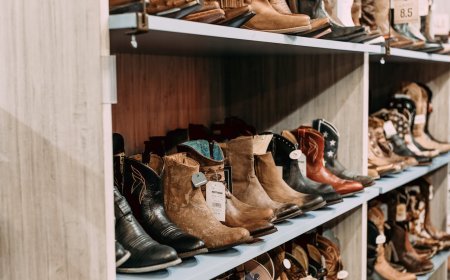

Top 10 Portland Spots for Vintage Fashion
Introduction Portland, Oregon, is more than just a city of coffee shops, rain-soaked streets, and indie music—it’s a thriving hub for vintage fashion enthusiasts seeking authenticity, craftsmanship, and individuality. In a world saturated with fast fashion and mass-produced clothing, Portland’s vintage scene stands out as a sanctuary for those who value quality, history, and sustainable style. But

Introduction
Portland, Oregon, is more than just a city of coffee shops, rain-soaked streets, and indie musicits a thriving hub for vintage fashion enthusiasts seeking authenticity, craftsmanship, and individuality. In a world saturated with fast fashion and mass-produced clothing, Portlands vintage scene stands out as a sanctuary for those who value quality, history, and sustainable style. But with dozens of thrift stores, consignment shops, and pop-up markets scattered across neighborhoods like Alberta, Mississippi, and Hawthorne, how do you know which spots truly deliver on trust?
Trust in vintage fashion isnt just about price or selectionits about transparency, curation, condition, and ethical sourcing. Its knowing that the 1970s suede jacket youre considering wasnt pulled from a landfill last week, but carefully restored by someone who understands textile history. Its knowing the 1990s denim was washed once, not twenty times, and still holds its shape. Its knowing the seller doesnt just resellthey respect the garments story.
This guide is not a list of the most popular vintage shops in Portland. Its a curated selection of the top 10 spots you can truly trusteach vetted for consistent quality, ethical practices, knowledgeable staff, and a commitment to preserving fashion history. Whether youre a lifelong collector, a first-time thrifter, or someone building a sustainable wardrobe, these are the places where authenticity meets style.
Why Trust Matters
When you shop for vintage fashion, youre not just buying a piece of clothingyoure investing in time, craftsmanship, and cultural memory. Unlike new retail items, vintage garments have already lived a life. Theyve been worn, stored, possibly altered, and often passed through multiple hands. Without trust, you risk purchasing items that are damaged beyond repair, misrepresented in age or origin, or even contaminated by poor cleaning practices.
Trust in a vintage shop means several things:
- Accurate Dating: A 1980s blazer shouldnt be labeled as 1970s. Reputable sellers know fabric weaves, zipper types, label logos, and construction techniques that reveal true era.
- Transparent Condition: No shop should hide stains, tears, or missing buttons. Trusted sellers describe flaws honestly and often include high-resolution photos.
- Proper Cleaning & Restoration: Vintage garments require specialized care. Trustworthy shops use gentle, non-toxic methodsnever harsh chemicals that dissolve dyes or weaken fibers.
- Ethical Sourcing: The best shops source from estate sales, local donations, or trusted collectorsnot from overseas bulk imports that exploit labor or deplete global textile heritage.
- Knowledgeable Staff: Staff who can tell you the difference between a 1960s Levis 501 and a 1990s reproduction are invaluable. Theyre not just cashierstheyre archivists of style.
Portlands vintage community has built a reputation for integrity. But not every shop upholds these standards. Some rely on volume over value, stacking racks with poorly sorted donations and labeling everything vintage to justify high prices. Others prioritize aesthetics over authenticity, using trendy filters and vague descriptions to mask poor quality.
Thats why this list focuses only on shops that consistently demonstrate trustworthinessthrough years of customer loyalty, transparent policies, and a passion for preservation. These are the places where you can walk in with curiosity and walk out with confidence.
Top 10 Portland Spots for Vintage Fashion
1. The Vintage Corner
Nestled in the heart of the Alberta Arts District, The Vintage Corner has been a Portland staple since 2007. What began as a small closet in a converted bungalow has grown into a meticulously organized 2,500-square-foot retail space. The owner, a former textile historian, personally inspects every item before it enters the store. Theres no as-is section hereevery garment is cleaned, repaired if needed, and tagged with its decade, material, and origin.
What sets The Vintage Corner apart is its Era Guidescolor-coded sections for each decade from the 1920s to the 1990s, with signage explaining key fashion trends of the time. Need a 1973 halter top with original metal buttons? Theyll show you the labels font style and fabric weave that confirms authenticity. Their collection of 1960s mod dresses and 1980s power suits is among the most comprehensive in the city.
They also offer a Vintage Care Kit with every purchase: a guide to storing, cleaning, and mending your new find. Their commitment to education makes them a favorite among students, designers, and collectors alike.
2. Miss Pixies Vintage
Located in the historic Mississippi neighborhood, Miss Pixies is the kind of place that feels like stepping into a well-loved grandmothers atticonly everything is pristine, curated, and stunningly styled. Founded by a former costume designer for local theater productions, Miss Pixies specializes in high-end vintage: designer labels from the 1950s to 1980s, including Dior, Yves Saint Laurent, and Halston.
Every piece is hand-selected from estate sales across the Pacific Northwest. The shop maintains a strict no fast fashion policyno 1990s Gap or 2000s Forever 21. Instead, youll find silk evening gowns, tailored wool coats, and hand-beaded evening bags that still shimmer like new. Their pricing reflects rarity and condition, not hype.
They offer private appointments for serious collectors and have a digital archive of every item ever sold, searchable by decade, designer, or silhouette. If youre looking for investment-grade vintage, Miss Pixies is the only place in Portland you need to visit.
3. The Green Thread
At the intersection of sustainability and style, The Green Thread is Portlands most ethical vintage destination. Founded by a team of environmental activists and fashion students, this shop operates on a zero-waste model: all garments are sourced locally, cleaned with plant-based detergents, and packaged in compostable materials. They even offer a Trade-In Tuesdays program where you can exchange gently used clothing for store credit.
While they carry a wide range of decades, their specialty is 1970s bohemian wear, 1980s workwear, and 1990s grungeitems that reflect Portlands own cultural evolution. Their denim collection is legendary: all pieces are 100% cotton, unwashed, and tagged with their original wash date. They also repair damaged items in-house using traditional techniques, like hand-stitching seams and re-weaving holes with matching thread.
Transparency is their hallmark. Every item has a QR code linking to its provenance: where it was found, who owned it before, and how it was restored. This level of traceability is rare in the vintage worldand deeply reassuring.
4. The Attic Archive
Hidden above a bookstore on Southeast Hawthorne Boulevard, The Attic Archive is a treasure trove for those who love obscure, unusual, and beautifully odd vintage. This shop doesnt just sell clothingit preserves cultural artifacts. Youll find 1940s nurse uniforms, 1950s bowling shirts, 1970s ski sweaters, and even vintage Hawaiian shirts from the 1960s tourist boom.
Owner Clara Whitmore spends months researching each items origin. Her handwritten tags include not just the decade, but the likely wearer: Worn by a Portland schoolteacher, 19681972, or Purchased at the 1971 Oregon State Fair. The shop feels less like a store and more like a museum exhibit you can touch.
They dont do sales or discounts. Every price is fixed, based on historical value and conditionnot demand. This means you might pay $120 for a 1958 wool blazer, but youll also know its authentic, unaltered, and historically significant. If youre drawn to the quirky, the forgotten, and the beautifully odd, this is your sanctuary.
5. Re:Form Vintage
Re:Form is a boutique that blends vintage with modern tailoring. Founded by a team of fashion designers who specialize in upcycling, this shop takes vintage garments and subtly alters them to fit contemporary silhouetteswithout compromising their integrity. A 1970s maxi dress might be shortened to a midi, or a 1980s blazer might be fitted with modern lapels. All modifications are reversible and documented.
They only work with garments in excellent condition, and every piece is labeled with its original era and its new form. This shop is perfect for those who love vintage aesthetics but want pieces that work in todays world. Their collection of reimagined 1990s flannel shirts and 1960s shift dresses has become a local favorite.
Re:Form also hosts monthly workshops on vintage repair and alteration, open to the public. Their commitment to education and sustainability makes them a leader in the next generation of vintage retail.
6. The Mended Closet
True to its name, The Mended Closet is a haven for damaged treasures. This shop specializes in garments that others would discard: torn silk, missing buttons, faded dyes, and moth-eaten wool. But here, nothing is too far gone. Their in-house seamstress, a master of textile restoration, uses century-old techniques to revive even the most worn pieces.
They source from local estate sales and family donations, often receiving entire wardrobes from elderly residents who want their clothing to live on. Each item is cataloged with its history: Worn to the 1954 Portland Art Museum Gala, or Bought by a WWII nurse in 1943.
What makes The Mended Closet truly trustworthy is their repair transparency. Before you buy, you can see photos of the original damage and the restoration process. Youre not just buying a dressyoure buying a story of resilience. Their prices are modest, reflecting the labor of restoration rather than rarity.
7. Portland Vintage Collective
Founded as a cooperative by seven local vintage dealers, the Portland Vintage Collective is a curated marketplace housed in a converted warehouse in North Portland. Each vendor is hand-selected based on their expertise, ethics, and consistency. You wont find random donations hereonly items vetted by professionals who specialize in specific eras: one dealer focuses on 1940s tailoring, another on 1980s punk, another on 1960s knitwear.
The space is organized like a high-end boutique, with lighting, mirrors, and layout designed to highlight quality over clutter. Every vendor maintains their own inventory, but all adhere to the same strict standards: no synthetic blends misrepresented as natural fibers, no modern reproductions labeled as vintage, no uncleaned items.
They host quarterly Vintage Appraisal Days, where customers can bring in family heirlooms for free evaluation. Its this level of community engagement and professional rigor that sets them apart.
8. The Time Capsule
Located in a converted 1920s pharmacy on Southeast 12th Avenue, The Time Capsule is a sensory experience. The shop is divided into decade roomseach recreated with period-appropriate wallpaper, lighting, and music to immerse you in the era of the clothing youre browsing. A 1950s dress is viewed under soft tungsten bulbs, while a 1990s flannel shirt is displayed beside a vintage boombox playing Nirvana.
The owner, a retired archivist from the Oregon Historical Society, insists that context matters. You wont just see a 1970s leather jacketyoull learn how it was worn at the 1973 Portland Folk Festival, what music it was paired with, and how it reflected the counterculture movement of the time.
Every item is accompanied by a printed Era Profile detailing its cultural significance. They also offer guided tours on weekends, led by staff trained in fashion history. If you want to understand not just what youre wearing, but why it mattered, this is the place.
9. The Silent Wardrobe
For those who prefer quiet, contemplative shopping, The Silent Wardrobe offers a meditative experience. No music, no chatter, no flashing lights. Just soft natural light, wooden shelves, and garments arranged by color and texture. This shop specializes in minimalist, timeless pieces: wool coats from the 1960s, linen shirts from the 1970s, and cashmere sweaters from the 1980sall in neutral tones, clean lines, and impeccable condition.
They dont carry loud prints, flashy accessories, or trendy items. Instead, they focus on garments designed to last decades, not seasons. Their customers are often architects, writers, and artists who value understated elegance. The shops founder, a former fashion editor, believes that true vintage is about restraint and longevity.
They offer a Wardrobe Audit service: bring in your closet, and theyll help you identify which modern pieces can be replaced with vintage equivalents for durability and style. Its a philosophy, not just a store.
10. The Heirloom Exchange
Perhaps the most unique of all, The Heirloom Exchange operates on a membership model. You pay a small annual fee and gain access to a rotating collection of heirloom-grade vintageitems passed down through generations, often with notes, photographs, or letters tucked in the pockets. These arent just clothes; theyre family legacies.
Each item comes with a Legacy Card detailing its journey: Worn by Eleanor M. to her wedding in 1951. Later worn by her daughter for her graduation in 1978. Some garments have been worn by multiple family members across 70 years.
The shop doesnt sell mass-produced vintage. Everything is one-of-a-kind, with documented provenance. They also host annual Heirloom Story Nights, where members share the histories behind their favorite pieces. Its a community built on reverencefor clothing, for memory, for time.
Comparison Table
| Shop Name | Specialty | Era Focus | Condition Transparency | Restoration In-House? | Provenance Tracking | Price Range |
|---|---|---|---|---|---|---|
| The Vintage Corner | Comprehensive decade collections | 1920s1990s | Highdetailed condition notes | Yes | Yesera guides & tags | $25$200 |
| Miss Pixies Vintage | Designer labels & high-end | 1950s1980s | Exceptionalno flaws hidden | Yes | Yesdigital archive | $150$1,200 |
| The Green Thread | Sustainable & ethical | 1970s1990s | Extremely highQR codes | Yes | Yesfull digital trail | $20$180 |
| The Attic Archive | Obscure & cultural artifacts | 1920s1980s | Highhandwritten provenance | Yes | Yespersonal stories | $30$300 |
| Re:Form Vintage | Modernized vintage | 1960s1990s | Highmodifications documented | Yes | Yesbefore/after photos | $60$250 |
| The Mended Closet | Restoration of damaged items | 1940s1980s | Exceptionaldamage history shown | Yes | Yesrestoration logs | $15$150 |
| Portland Vintage Collective | Curated vendor marketplace | All decades | Uniformly high | Varies by vendor | Yesvendor standards | $20$500 |
| The Time Capsule | Immersive era experiences | 1940s1990s | Highcontextual labeling | Yes | YesEra Profiles | $40$300 |
| The Silent Wardrobe | Minimalist & timeless | 1960s1980s | Exceptionalonly pristine items | Yes | Yesmaterial & origin logs | $80$400 |
| The Heirloom Exchange | Family heirlooms | 1920s1970s | Unmatcheddocumented lineage | Yes | YesLegacy Cards | $100$1,500 |
FAQs
How do I know if a vintage item is authentic and not a modern reproduction?
Authentic vintage items often have telltale signs: metal zippers (common before the 1970s), hand-stitched seams, unique fabric blends (like rayon or acetate), and labels with outdated logos or fonts. Reputable shops will point out these details. If a seller cant explain the construction or material, be cautious. Online photos should show close-ups of tags, seams, and wear patterns.
Is vintage clothing really more sustainable than buying new?
Yes. The fashion industry is responsible for nearly 10% of global carbon emissions. Buying one vintage garment saves the water, energy, and chemicals needed to produce a new one. Plus, extending the life of clothing prevents it from ending up in landfills. Shops like The Green Thread and The Mended Closet prove that sustainability and style can coexist.
Can I return vintage clothing if it doesnt fit?
Policies vary. Most trusted shops do not offer returns due to the one-of-a-kind nature of vintage. However, many offer exchanges or store credit, especially if the item was mislabeled. Always ask about their policy before purchasing. Shops like The Vintage Corner and Re:Form are especially transparent about this.
How should I care for vintage clothing at home?
Store items in breathable cotton garment bags, away from direct sunlight. Use cedar blocks, not mothballs. Wash only when necessary, using cold water and mild detergent. Hang wool and silk on padded hangers. For delicate items, dry cleaning is not always the answermany vintage pieces are better hand-washed or professionally restored. Trusted shops often provide care guides with purchases.
Are vintage prices in Portland higher than other cities?
Portlands vintage prices are competitive with other major West Coast cities. Youll find lower prices for common 1990s items, but higher prices for rare, well-preserved pieces due to the citys strong collector culture. The difference is in quality: Portlands trusted shops rarely overprice, and they rarely sell damaged or misrepresented items.
Do these shops ship internationally?
Most do. Shops like Miss Pixies, The Green Thread, and The Heirloom Exchange offer international shipping with careful packaging and insurance. Always confirm shipping policies and customs fees before ordering. Many also provide detailed condition reports and photos for overseas buyers.
How can I support ethical vintage shopping in Portland?
Choose shops that disclose sourcing, repair practices, and material origins. Avoid places that sell bulk imports or label everything vintage without proof. Support stores that educate customers, employ local artisans, and prioritize preservation over profit. Attend their workshops, follow their blogs, and share their mission.
Conclusion
Portlands vintage fashion scene isnt just about finding a cool jacket or a retro dress. Its about connecting with history, honoring craftsmanship, and rejecting disposability. The ten shops featured here arent just retailerstheyre curators, historians, restorers, and storytellers. Theyve built trust not through flashy ads or social media trends, but through years of quiet dedication to quality, transparency, and respect for what clothing can represent.
When you shop at one of these places, youre not just buying a garment. Youre becoming part of its next chapter. Youre preserving a piece of time that might otherwise be lost. Youre choosing slow fashion over speed, integrity over convenience, and meaning over mass production.
So the next time you walk into a vintage shop in Portland, ask yourself: Do I trust this place? Does the staff know what theyre selling? Can I see the history behind the fabric? If the answer is yes, youve found your next favorite spot.
And if youre just starting out? Begin with The Green Thread or The Vintage Corner. Theyre welcoming, educational, and deeply rooted in the values that make Portlands vintage scene one of the most authentic in the country. Then, as your collection grows, explore the deeper treasures at Miss Pixies, The Attic Archive, and The Heirloom Exchange.
Because in the end, vintage fashion isnt about looking backits about wearing your values forward.